

July 15, 2026
Taking that first step onto the property ladder is an exciting milestone, but it often comes with a flood of financial questions. For most buyers across Yorkshire and the wider UK, the biggest hurdle isn’t finding the perfect home – it’s saving up the cash to secure it.
If you are currently browsing listings, you’ve likely found yourself asking: “How much deposit do I actually need for a house?” or “What is considered a ‘good’ deposit?”
While the exact figure depends entirely on the purchase price of the property you want to buy, the general rules of mortgage lending remain the same. This complete guide breaks down the minimum requirements, average costs, and how your deposit size impacts your monthly payments.
What is the Minimum Deposit for a Mortgage?
In the UK property market, mortgage deposits are calculated as a percentage of the property’s total purchase price.
As a general rule, the absolute minimum deposit you need is 5% of the property’s value. This is often referred to by banks and brokers as a 95% Loan-to-Value (LTV) mortgage – meaning you borrow 95% of the cash and provide 5% upfront.
To put this into perspective, let’s look at how a 5% deposit scales depending on the property value:
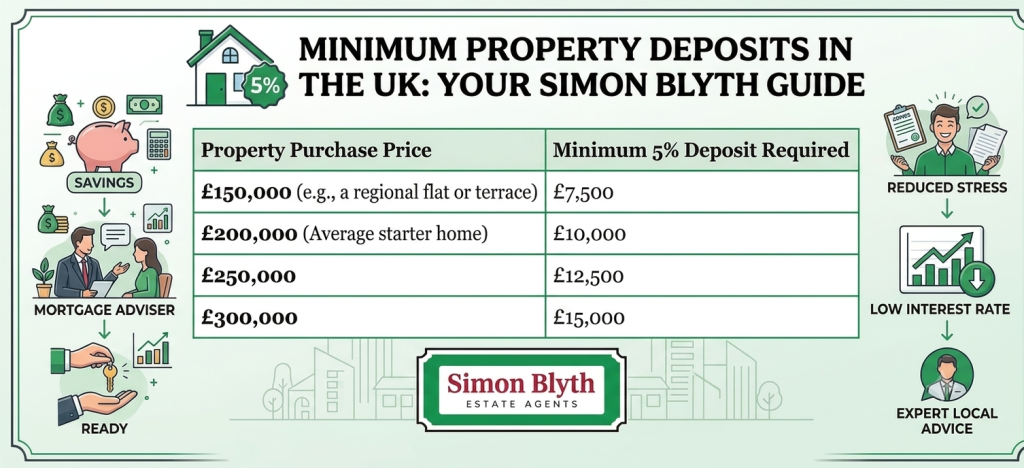
Note on Flats & New Builds: If you are asking “how much is a deposit on a flat or a new-build property?”, be aware that some lenders view these properties as higher risk. Consequently, they may require a slightly higher minimum deposit (often 10% to 15%) than they would for a standard second-hand house.
What is Considered a “Good” House Deposit?
While 5% is the minimum entry point to get a mortgage, aiming for a larger deposit comes with massive financial perks.
Mortgage interest rates are tiered based on your LTV. Every time you clear a 5% threshold (moving from a 5% deposit to a 10%, 15%, or 20% deposit), you unlock significantly cheaper mortgage rates. Lenders view you as a lower-risk borrower, meaning they reward you with better deals.
-
5% Deposit: Gets you on the ladder quickly, but carries the highest interest rates and larger monthly repayments.
-
10% to 15% Deposit: The ideal “sweet spot” for many buyers. It significantly widens your choice of lenders and lowers your interest rates.
-
20%+ Deposit: This is what the average UK first-time buyer actually puts down (often aided by family assistance or long-term savings). It puts you in a highly competitive position with banks.
Putting down a larger deposit also protects you from the risk of negative equity – a situation where a dip in the housing market causes your house to be worth less than the outstanding mortgage loan.
Hidden Upfront Costs to Remember
When calculating how much deposit you need for a house, it is vital that you don’t empty your bank account completely down to the penny. The deposit is only part of the puzzle. You must keep some cash held back to cover essential moving fees, including:
-
Conveyancing & Legal Fees: To pay your solicitor for dealing with the contracts.
-
Product & Broker Fees: Some mortgage deals charge an arrangement fee (typically around £999 to £2,000).
-
Surveys: To ensure the property you are buying is structurally sound.
-
Stamp Duty: While first-time buyers in the UK benefit from generous tax relief exemptions up to certain property values, home movers will need to factor Stamp Duty Land Tax (SDLT) into their upfront budget.
Ready to Find Out What Your Money Can Buy?
The regional property market across Yorkshire offers fantastic value compared to national averages, meaning your savings pot might stretch a lot further than you think.
At Simon Blyth, we don’t just sell houses – we help buyers navigate the entire journey safely. Whether you have a 5% deposit ready to go or you’re looking to sell your current home to unlock equity for a larger down payment, our local teams are here to help.
To make sure you are in the best possible position before you start viewing homes, it is highly recommended to get your finances in order early. We work in partnership with the Mortgage Advice Bureau (MAB), who are independent brokers with access to whole-of-market products. Because they can search thousands of deals to find the right one for you, it is incredibly important to speak to them right at the start of your house-buying journey.
Want a realistic view of what you can afford in today’s market? Browse our current properties for sale or get in touch with your nearest Simon Blyth branch today to chat with our local experts.